How laparoscopic hernia surgery reaches the area needing repair
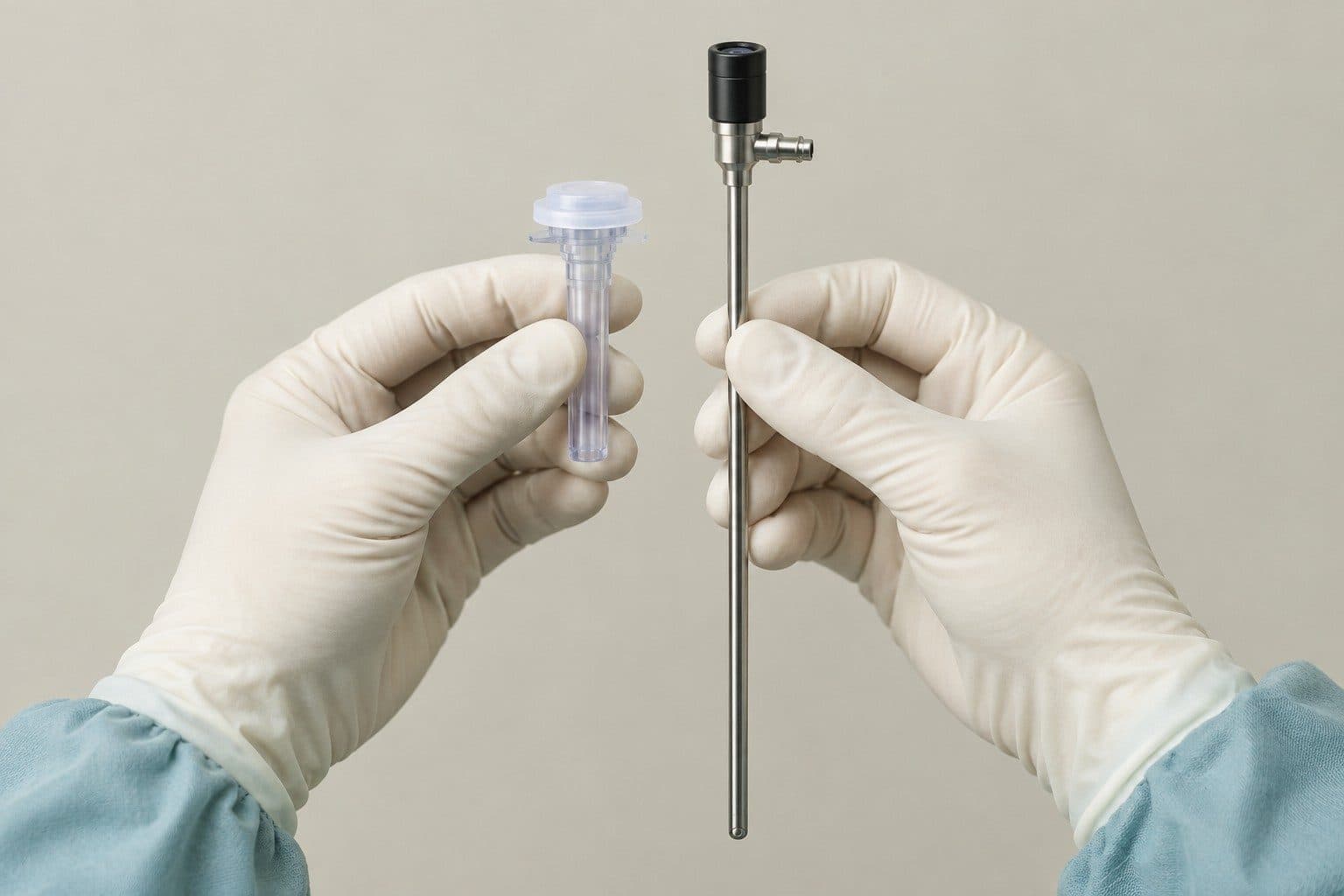
Keyhole, or laparoscopic, repair uses a camera and instruments through small cuts in the abdomen. Open repair uses an incision near the hernia. Both aim to return the protruding tissue and repair the weakness, often with mesh.
For a groin hernia, TEP and TAPP are two laparoscopic routes to the space behind the abdominal wall. These terms describe how the surgeon reaches that space. They do not mean that one method is suitable for every patient.
When a hernia contains bowel, repair involves returning that tissue to the abdomen. In his recorded explanation, Dr Lee describes this step.
“we first ease the bowel back in place”
What TEP means when planning laparoscopic groin hernia repair
TEP stands for totally extraperitoneal repair. The surgeon works between the abdominal wall and its inner lining, called the peritoneum, without entering the main abdominal cavity. Mesh is placed in this space to reinforce the groin weakness.
Ask how earlier operations or an earlier hernia repair may affect access to this space. The surgeon can explain whether TEP is appropriate and what would happen if the approach needed to change.
How TAPP reaches the same area through a different route
TAPP stands for transabdominal preperitoneal repair. The surgeon enters the abdominal cavity, opens the inner lining to reach the space behind it, places the mesh and closes the lining over it.
TEP and TAPP both place mesh behind the groin defect. Entering the cavity is one difference to discuss, alongside the risks, previous surgery and the surgeon’s experience. These groin repair descriptions should not be assumed to describe every abdominal wall hernia operation.
When an open hernia repair may be an appropriate choice
Open repair gives access through an incision near the hernia. The operation may use stitches or mesh, depending on the hernia and the proposed technique. Open surgery does not always mean that mesh sits on the outer surface of the abdominal wall.
For some groin repairs, local anaesthesia may be an option. Laparoscopic repair usually requires general anaesthesia. Discuss the intended anaesthetic and the reasons for the recommendation, rather than choosing from the scar size alone.
What guides the choice between keyhole and open hernia surgery
The decision considers the hernia type, whether one or both sides are involved, previous repairs and your suitability for anaesthesia. The surgeon’s experience with the proposed repair also matters.
Previous abdominal operations or a more complex hernia may change the available options. An open operation remains an appropriate choice for some people. Small incisions alone do not settle the decision.
Read the NICE guidance on choosing an inguinal hernia repair approach.
Why mesh position and surgical access are separate decisions
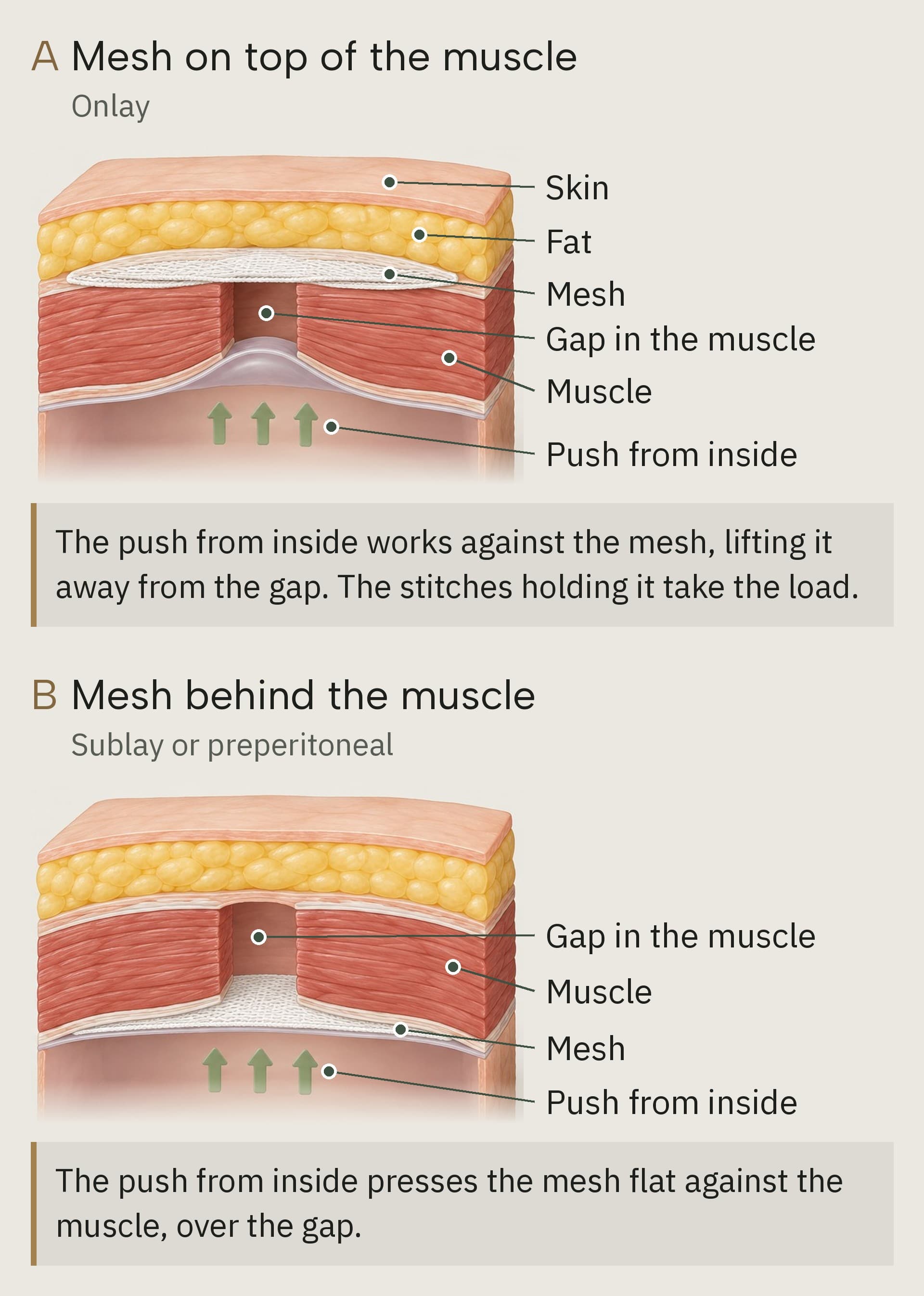
Mesh reinforces a weak area. Its position in relation to the abdominal wall is distinct from whether the operation is laparoscopic, open or robot-assisted. Open surgery can also place mesh in deeper layers.
There is no single mesh position or access route that suits every hernia. For incisional hernias in particular, the size and site of the defect, previous surgery and the planned abdominal-wall reconstruction affect the repair.
What it may cost, how soon you go home, and who operates
MediSave can be used for eligible hernia surgery, within limits set by MOH. Hernia surgery is usually covered under Integrated Shield plans, and what your plan pays depends on your policy and the approved claim.
For suitable cases the operation is done as day surgery, so you go home the same day.
Dr Daniel Lee became a Fellow of the Royal College of Surgeons of Edinburgh in General Surgery in 2015. At Khoo Teck Puat Hospital he was Head of Colorectal Surgery and Surgical Lead for Geriatric Surgery.
Questions to settle before your planned hernia repair operation
Tell the team about all medicines, allergies, previous anaesthetic problems and earlier operations. Follow the team’s instructions about fasting and medicines. Do not stop a prescribed medicine based on general website information.
- Which approach is recommended, and what are the alternatives?
- What anaesthetic is planned?
- Could the operation need to change to an open approach?
- What will the estimated bill include?
Risks to discuss before keyhole or open hernia repair
Hernia repair can involve infection, bleeding, injury to nearby structures, lasting pain and the hernia returning. Anaesthesia has its own risks. Your surgeon can explain which risks apply to your operation and health.
Ask what symptoms after discharge should prompt a call to the surgical team and what would need urgent care.
Plan recovery after hernia surgery around your own activities
Recovery depends on the operation and the individual. Walking, desk work, driving and heavy lifting place different demands on your body. A smaller incision does not give everyone the same recovery timetable.
Ask about help at home, time away from work and the return to exercise. Follow your own discharge instructions for wound care, pain relief and activity.
Practical differences between keyhole and open inguinal hernia repair
This comparison describes adult inguinal (groin) hernia repair. Other hernias may need different techniques.
| What differs | Keyhole repair | Open repair |
|---|---|---|
| How the surgeon reaches the hernia | A camera and instruments pass through small cuts in the abdomen. | An incision near the hernia gives access to the area needing repair. |
| Anaesthesia | Laparoscopic inguinal repair generally uses general anaesthesia. | Local, regional or general anaesthesia may be used, depending on the repair and your health. |
| Where mesh is placed | TEP and TAPP place mesh behind the groin defect, in the space outside the inner abdominal lining. | The position depends on the technique. Open access can also allow mesh to sit behind the abdominal wall. |
The choice depends on the hernia, any previous operations, your health and the surgeon’s experience. Incision size alone does not establish which repair is appropriate or how quickly you will recover.