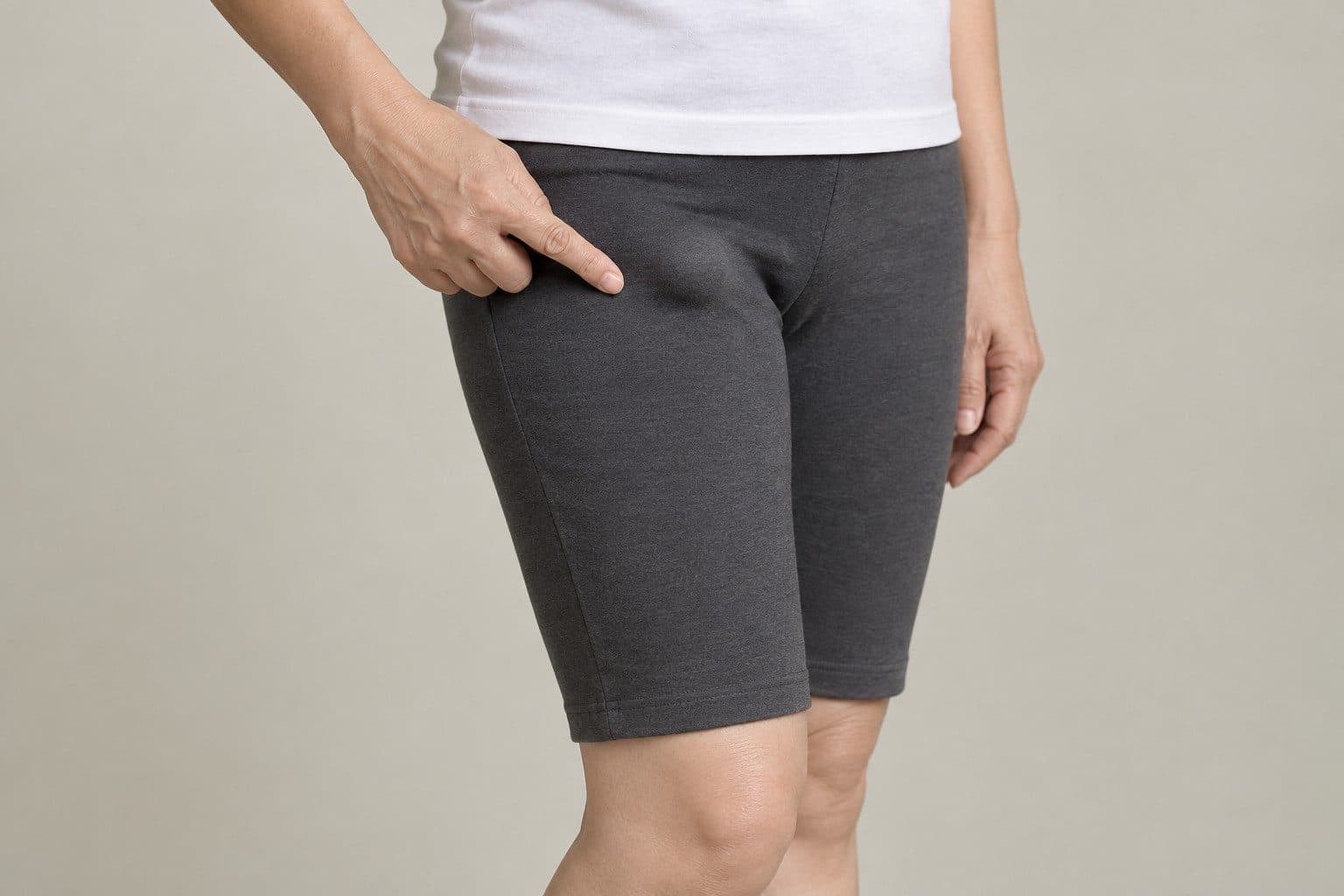
Where a femoral hernia develops in the upper thigh
A femoral hernia occurs when fat or bowel pushes into the femoral canal, a passage near the top of the thigh below the groin crease. It is less common than an inguinal hernia and occurs more often in women, particularly older women.
The lump may become more visible when standing or straining. Some people notice discomfort in the groin, while others have little warning. The position of a lump can be a clue, but it is not a reliable way to diagnose yourself. A lymph node or another swelling can resemble a hernia.
How a hernia forms
- Supporting abdominal wall
- Tissue protruding through a gap
Why a groin lump needs a diagnosis before treatment
Explain when the lump appeared, whether it changes with position and whether it has become painful. The examination aims to distinguish a femoral hernia from an inguinal hernia and other causes of a groin lump. Imaging may be considered if the findings are unclear.
Mention previous groin surgery, including a repair on the same side. If a lump has already been assessed but is changing, describe the change rather than assuming the earlier explanation still applies. For an older parent, it helps to bring a medication list and describe their usual mobility and support at home.
- Where exactly do you notice the lump or discomfort?
- Does it disappear when lying down, or has that changed?
- Have you developed abdominal pain, vomiting or difficulty passing wind?
Why femoral hernia repair is usually advised after assessment
The opening of a femoral hernia can trap its contents. If bowel becomes trapped, it may become blocked or lose its blood supply. This risk is higher than with an inguinal hernia, which is why watchful waiting advice for selected men with inguinal hernias does not transfer to this condition.
A recommendation for timely repair still needs to take your health into account. Ask how soon treatment is advised and what the plan would be if another medical problem makes surgery difficult. Mild symptoms are not a reason to leave a confirmed femoral hernia without a treatment discussion.
What determines the approach to your femoral hernia repair
A laparoscopic repair uses small incisions and a camera. An open repair uses an incision near the hernia. The tissue is returned and the defect repaired, often with mesh. The approach depends on your circumstances, previous operations and whether treatment is planned or needed as an emergency.
Ask why the recommended method suits your case and whether another groin defect may also need attention. Discuss anaesthesia and risks, including bleeding, infection, ongoing pain, recurrence and injury to nearby structures. If bowel is damaged in an emergency, the operation may also need to address that injury.
Symptoms that mean you should go to an emergency department
Sudden severe groin or abdominal pain, a newly hard or tender lump, vomiting, or abdominal swelling with difficulty passing stool or wind needs emergency assessment. These symptoms can occur with obstruction or strangulation. Do not wait for a clinic appointment or an online response to see whether they settle.
What to prepare before femoral hernia surgery and recovery
Ask whether a hospital stay is expected and what support you will need afterwards. A planned repair and an emergency operation may have different recovery needs. Avoid arranging work or travel around a general promise of same-day discharge. Confirm the plan for your operation.
Before leaving hospital, make sure you understand pain relief, wound care, activity advice and follow-up. If you help care for a parent, ask what assistance they may need with walking, meals and usual tasks. General fees information is available separately. An itemised estimate should reflect the proposed repair and hospital care.